Athletic Training Residency
The Nation’s Only CAATE-Accredited Residency in Prevention and Wellness (currently seeking accreditation)
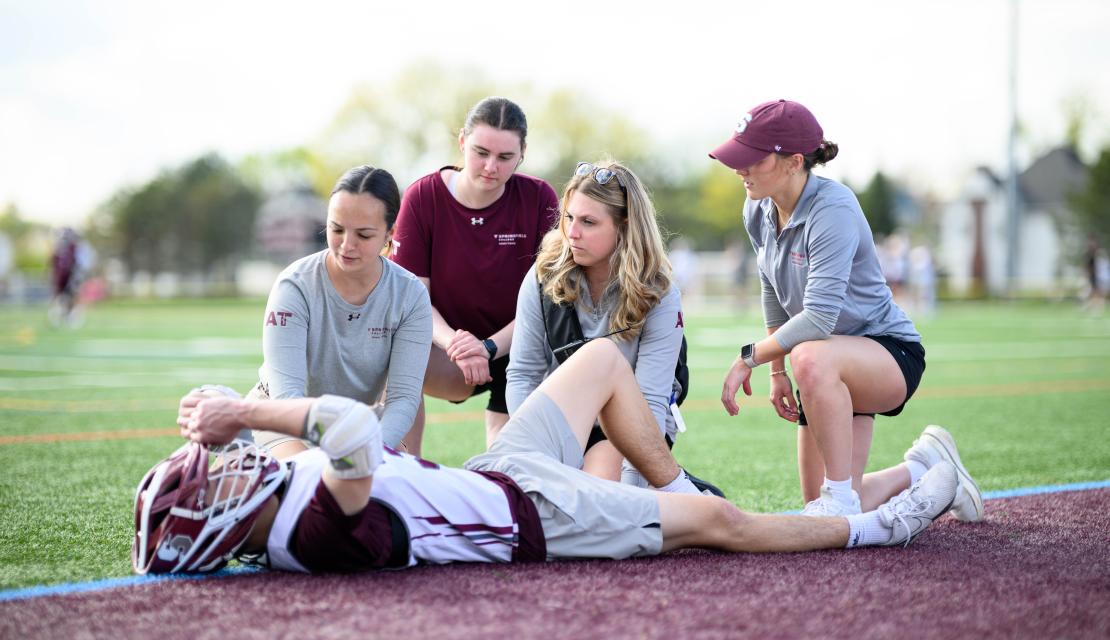
- We are the only program in the country associated with a professional athletic training (AT) program. With continuous accreditation since 1996, this demonstrates a commitment to excellence in AT education. Residents will collaborate with Master of Science in Athletic Training (MSAT) program students, serving as a preceptor, and will have the opportunity to work alongside post-professional graduate students.
- Clinical practice area: NCAA DIII Collegiate Athletics
- Teaching opportunities: Within MSAT program and as MSAT Clinical Preceptor
Mission
The mission of the athletic training residency at Springfield College is to prepare athletic trainers for advanced clinical practice in prevention and wellness through supported, mentored clinical experiences, didactic learning opportunities, and scholarship. Residents are educated and mentored through a holistic lens, encouraging personal growth, relationships with the local and campus communities, and the provision of healthcare services informed by the Humanics philosophy of education in spirit, mind, and body through leadership and service to others.
Athletic Training Residency Program Outcomes:
By the completion of the 24-month Springfield College Athletic Training Residency, an athletic trainer will:
- Demonstrate knowledge, skills, and abilities consistent with advanced, patient-centered, athletic training practice with a specific focus in prevention and wellness.
- Demonstrate the ability to utilize evidence-based practice to optimize patient outcomes as it specifically relates to injury prevention and wellness.
- Engage in interprofessional and interdisciplinary practice with physicians and allied healthcare providers, strength and conditioning, mental health care, and other wellness professionals to optimize health and wellness (e.g. social, emotional, spiritual, environmental, occupational, intellectual, physical) for individuals and groups.
- Engage in reflective practice, critically evaluating their clinical practice through quality improvement, available research and patient outcomes.
- Engage in scholarship as defined by Boyer.