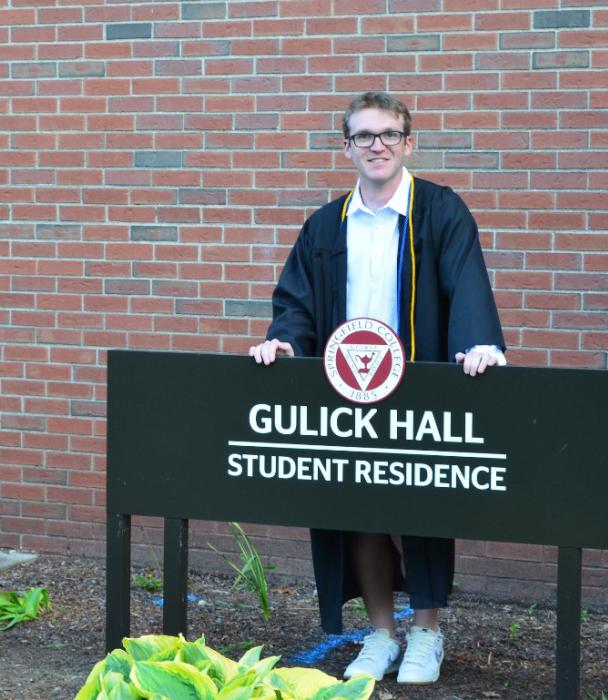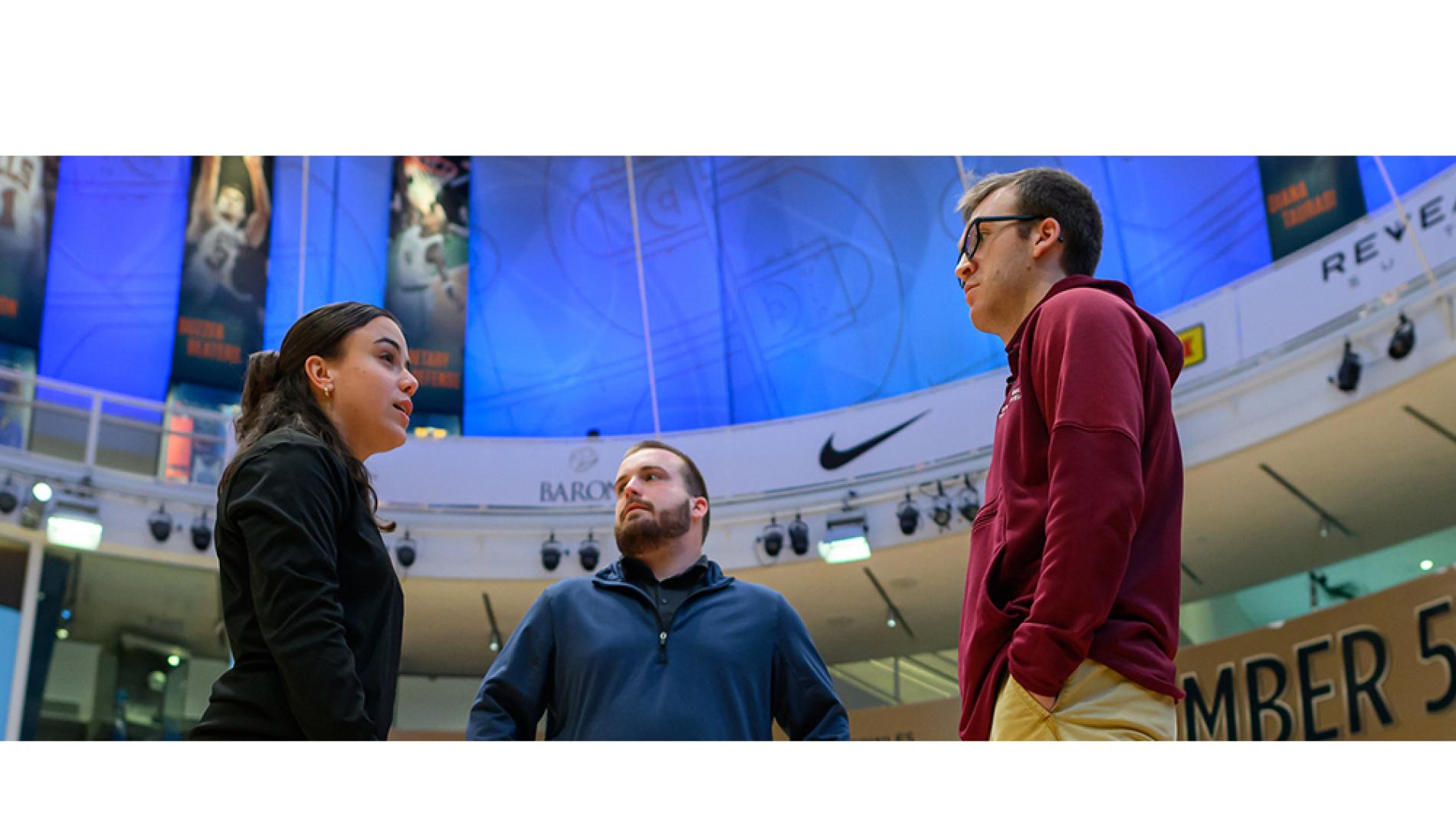
Through his Springfield College Athletic Leadership master’s program, William Balzano served as an activity facilitator at an important student-athlete leadership conference for local high schoolers. It was an opportunity that fit perfectly with his studies at the College and his coaching opportunities in football and track and field at Chicopee (Mass.) High School. The conference delved into the challenges today’s high school student-athletes face—from performance pressures to effective communication, and more. Learn how Balzano benefited from the conference just as much as the student participants.
I had the opportunity to help facilitate the Massachusetts Interscholastic Athletic Association (MIAA) Student-Athlete Leadership Conference on November 17, 2025, at the Naismith Memorial Basketball Hall of Fame in Springfield, Mass. As both a graduate student in the Springfield College Athletic Leadership master’s program and a high school coach in the area, this experience felt like the perfect intersection of everything I study, everything I teach, and everything I hope to model for my own athletes.
This year’s conference theme, “Daring Leadership: Leading When the Road is Rocky in Sports and Life,” could not have been timelier. High school student-athletes face challenges that extend far beyond their sport, including team dynamics, communication struggles, performance pressures, and the everyday uncertainties of adolescence. Providing them with a structured space to explore what leadership looks like in these moments is more than just beneficial; it's essential.
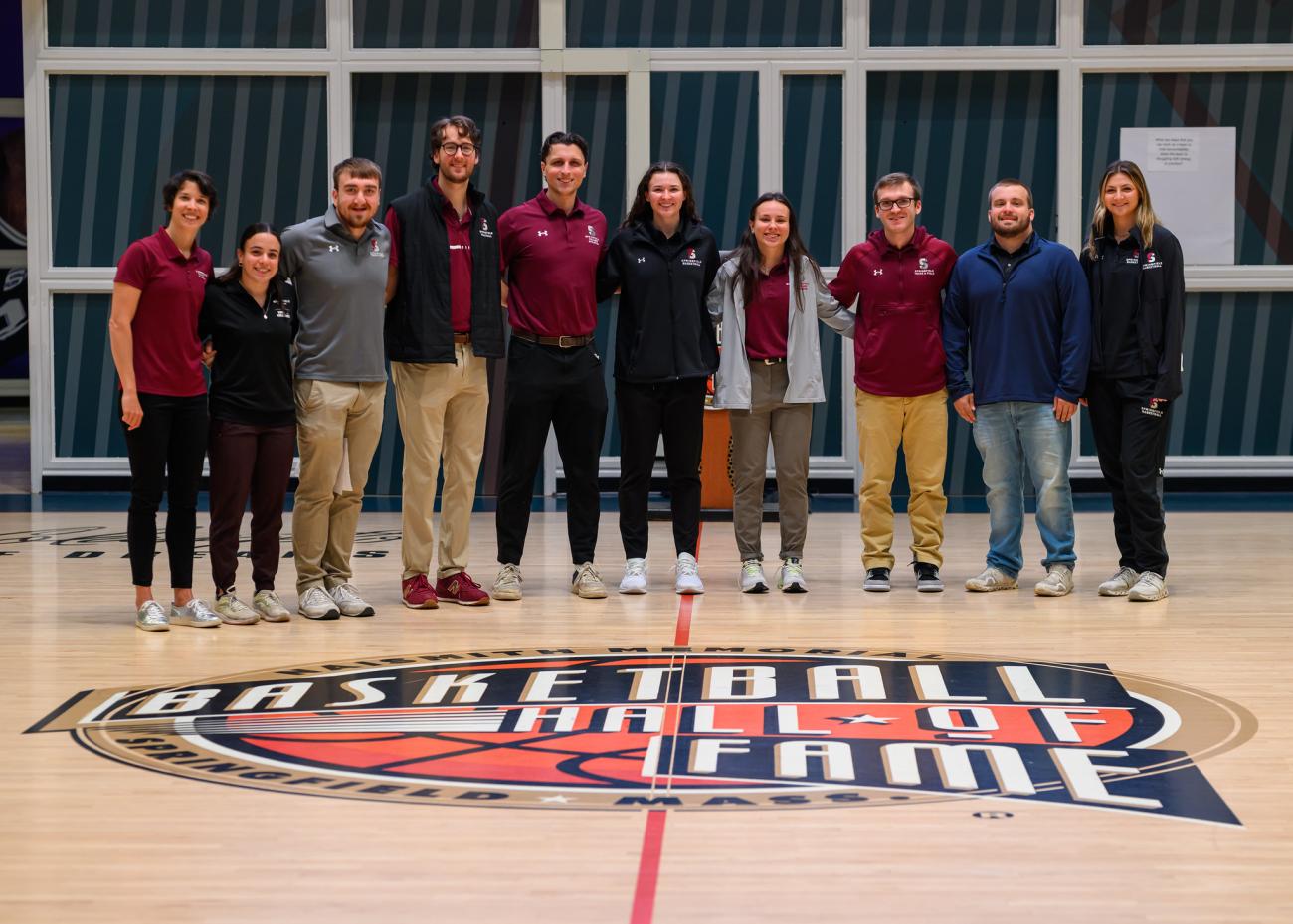
I served as an activity facilitator in one of the conference’s breakout sessions. Jill Kochanek, PhD, director of the Athletic Leadership program and assistant professor of Physical Education, led our group of three facilitators, each working with different clusters of student-athletes of about 45 per group. Our session focused on navigating hard conversations across three major relationships in a student-athlete’s world: teammate-to-teammate, player-to-coach, and player-to-parent.

As I facilitated these discussions, I found myself reflecting on my own coaching. I’ve watched student-athletes at my high school struggle with the very scenarios we explored—hesitating to speak up, unsure how to communicate with a teammate, or avoiding difficult conversations entirely. Seeing athletes from across the region confront these situations head-on reminded me of the importance of creating environments where students feel supported in developing these skills. It also gave me new approaches that I can bring back to my own team, including more intentional communication exercises, more opportunities for athletes to practice leadership in low-stakes moments, and more space for them to openly process challenges.
For me, the conference didn’t just reinforce concepts from my Athletic Leadership coursework; it deepened them. I wasn’t only teaching leadership; I was also learning from the students, my fellow facilitators, and the conversations that unfolded. That dual identity, being both a student and a coach, made this experience especially meaningful. The lessons I took from the day will directly influence how I guide my athletes through conflict, how I structure team culture, and how I support them when the road gets rocky.
The conference, sponsored by Ludlow (Mass.) High School’s Tim Brillo and Chicopee High School’s Sean Mackin, created a supportive environment for students to explore who they are as leaders and who they aspire to become. As someone who coaches at the high school level, I know how easy it is for young athletes to doubt their voice or underestimate their impact. Watching them engage in tough conversations and seeing their willingness to step into discomfort reminded me why leadership education is so important.
By the end of the day, the message we had hoped to convey had become clear: You don’t have to be a vocal leader to be an effective one, but you do need to develop the courage to face difficult moments head-on. Hard conversations, challenging scenarios, and unexpected obstacles are part of sports and life. What matters is how you respond.
About the author
William Balzano is a graduate student in the Athletic Leadership program at Springfield College, where he also earned his bachelor’s degree in Physical Education and Health Education. He currently coaches sprints at Chicopee High School, bringing his passion for athlete development and positive leadership into both the classroom and the track.