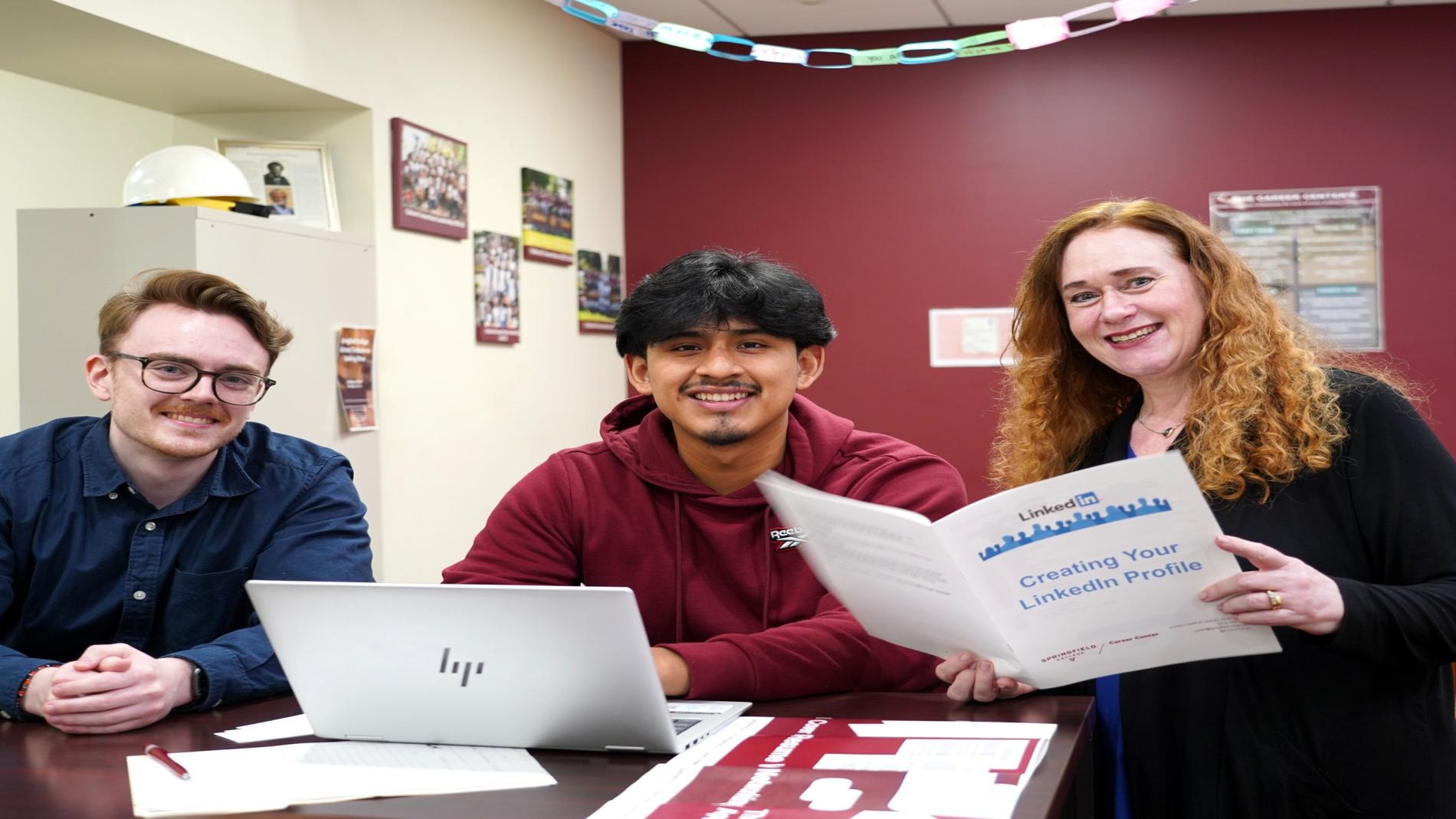
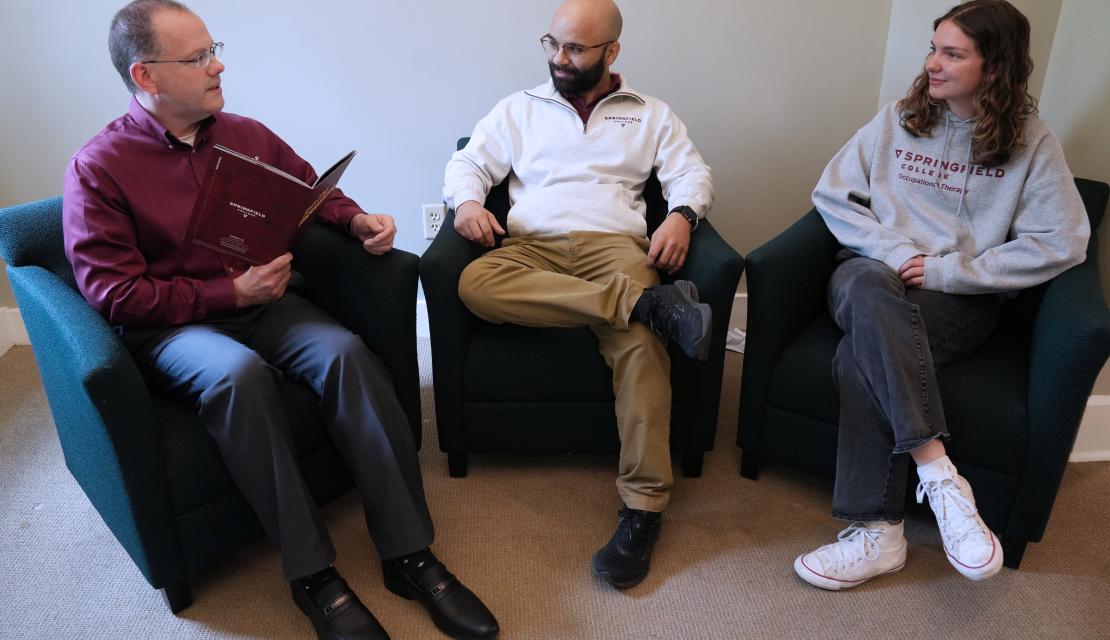
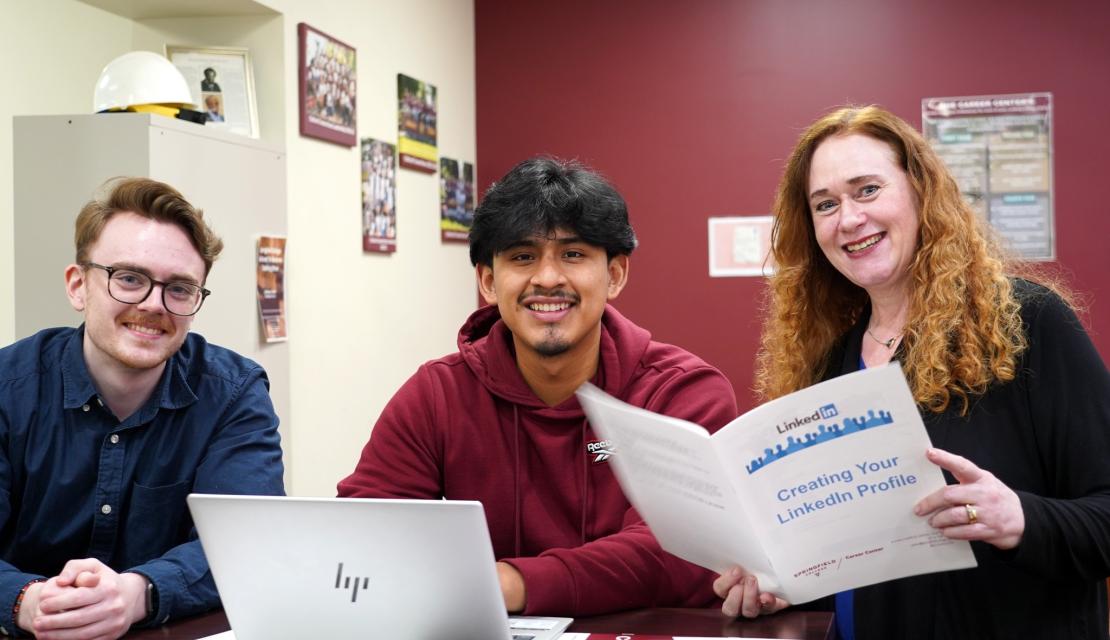
The Springfield College Career Center has always worked to intentionally adapt their career advice and resources to reflect the evolution and changes in global and regional hiring practices and workforce development specifically across the industries related to all of our academic majors. The Career Center staff is educating our faculty and administrators on the ever-changing landscape pursuant to artificial intelligence (AI) and application credentials being tailored toward a skills-based methodology. Hear from Scott Dranka, Career Center director, and Laurie Wrona, Career Center associate director of strategic partnerships and planning, as they answer some of the most relevant questions related to this topic today.
With the shift from actual employers having humans individually review application material to the use of data-driven recruitment, predictive analytics, and online algorithms to sort and process resumes and applications using Applicant Tracking Systems (ATS), driven by artificial intelligence (AI), the Springfield College Career Center continues to be focused on helping our students succeed during the hiring processes. The Career Center is actively tracking and then educating students and alumni about ATS and AI in the hiring process, and also the global shift toward focusing on “skills-based” hiring where employers have pivoted to reviewing candidates’ credentials based on a skills-based taxonomy.
We knew that we were already well positioned to embark on this project having had the background of the emergence of skills-based hiring, plus advancements, of AI over the last nearly two years. However, with regard to ensuring that students would successfully and competently be able to navigate through a skills-based hiring process throughout their entire time in the workforce, we realized that we needed data, dialogue, and input from the larger campus community. We engaged with the faculty in each undergraduate major/discipline in order to identify how we were already developing skills in our students, while also needing to identify any skills-gaps. The Career Center referenced the National Association of Colleges and Employers' (NACE) list of skills-based career competencies (deemed by colleges and employers) as the most critically essential workforce skill-sets to be held by successful employees across career fields in the workforce.
Q. When did the use of AI by employers in the recruiting/hiring process really ramp up?
Laurie : Both Scott and I have had the privilege of working in the Springfield College Career Center for over 25 years each. This longevity is due to how much we each believe in the mission and people of Springfield College. One of the things that drew us to Springfield College and has kept us both here (since late in the last century), is that while career-related trends evolve and the advice we give has to change as a result, the Springfield College Career Center has always been uniquely supported by this institution. We have been so supported that in career counseling professional circles and among our peers, we have frequently been recognized as “thought leaders.” The Springfield College Career Center has always intentionally adapted our career advice and resources to reflect the evolution and changes in global and regional hiring practices and workforce development across the industries related to all of our academic majors.
Starting as early as from 2015-19, employers started to shift from having humans individually review application materials to using data-driven recruitment, predictive analytics, and online algorithms to sort and process resumes and applications using ATS. As early as 2020, AI began to permeate every aspect of recruitment, with AI chatbots becoming mainstream to manage high volumes of applications. COVID additionally impacted the recruiting process as every step of the traditional recruiting process shifted to a more virtual format, decreasing the amount of actual human interaction candidates expected in the hiring process. Online Natural Language Processing (NLP) and Large Language Models (LLM) began to transform resume screening. Things started changing faster and faster. A few years ago, I was honored to be promoted to associate director of strategic partnerships and planning in the Career Center. This position was revamped to include intentionally studying workforce trends, weaving this into our materials and developing ways to share this information with the larger campus.
Scott: The Career Center has been intentionally incorporating specific AI- and ATS-related advice into all of our advice and materials since early 2024. Starting in 2025, employers ubiquitously incorporated AI into their ATS systems and entire hiring process, including tracking, sorting, interviewing, and decision-making. As of May 2026, employers do not hire a candidate without some human vetting, however, they do disqualify candidates solely using AI. This shifted the hiring processes across industries to a completely skills-based application process. As of today, employers are using AI in several ways during the hiring process. They are using ATS to parse resumes and source candidates, conduct online skills assessments, as well as draft correspondence and communicate with candidates, schedule meetings, and even conduct interviews online.
Q. What are some of the biggest challenges students who are searching for a job face related to AI use by employers?
Scott: One of the biggest challenges for our students and alumni in this new skills-based AI-powered recruiting and hiring process is that Springfield College students and alumni have historically had the most success leveraging relationships and the unique skills they develop during their time on Alden Street to network their way into jobs. While networking is still the number one way to actually secure a job, the front line of applying is now an AI system, not a human. There is no person anywhere in this part of the process.
The hiring process is becoming increasingly automated, with AI chatbots handling initial interactions instead of recruiters. Applicants never know why they were rejected. Some companies even use AI to conduct initial interviews, and they analyze facial expressions, tone of voice, and body language in recorded video interviews. These systems can be off-putting, causing anxiety and punishing candidates who do not perform well on camera.
AI also has some inherent issues, including that they are trained on historical data, which can reflect human biases. Some AI hiring tools have been found to discriminate against women, people of color, LGBTQ+ candidates, older workers, and neurodivergent individuals.
To add to all of these issues, the ATS and AI systems are constantly changing, so we have to continue to adapt our advice and a faster and after rate.
Q. What is an Applicant Tracking System (ATS) and why do employers use it?
Scott: Applicant Tracking Systems are AI-run/automated Human Resource or company software portals that automates some portions of the recruitment process, including receiving, parsing/storing, and filtering candidates’ application credentials that were submitted. There are numerous software platforms out there with varying levels of sophistication, however, most function similarly. Systems like these allow employers to manage large volumes of application materials. These portals rank resumes and other materials using a skills-based taxonomy while comparing them to the actual job posting. Automation saves personnel time and reduces costs while streamlining for efficiencies. Some software ATS systems even schedule and run interviews. These software portals also serve as a centralized repository used to store, house, and sort all application materials while also helping companies improve hiring metrics and workflow. One of the biggest problems with helping students and alumni prepare their job search materials to be readable by the ATS systems, is that there are dozens and dozens of different ATS systems, and you never know which system a given employer is using.
Laurie: Employers originally started using AI because they were getting too many applications to process using traditional means. They incorporated the ATS and AI to streamline the process on their end. They were afraid that they would get left behind in the search for talent if they did not adopt these tools. The Career Center has developed specific strategies to help students address all of these A- and ATS-related concerns as they create their job search materials, and woven them into all of our advice and materials. This has helped our students create good skills-based job search materials. However, there are also several paid platforms which help job candidates create materials which are specifically geared towards creating the perfect application for each position. Whether or not these individuals have the skills the employers are seeking, this gets the application through the AI system and now the recruiters are back to having too many applications to process. AI is parsing the applications and now AI can also be writing the applications. Things will continue to evolve, and the Springfield College Career Center will continue to monitor it. We are currently reviewing software that will bridge the gap between helping students honestly and appropriately craft their job search materials to highlight their skills, education, and experience in a way that will get them past the ATS, but also help hone their knowledge of their skills and professional brand in a way that they will be able to market themselves in person.
Q. Why is there a focus on skills-based training (hiring)?
Scott: The days of employees finding their first job, and then building their entire career with that same employer are gone. Employers are no longer hiring based solely on GPA, or major, instead they want candidates who possess and can demonstrate skills from a variety of gathered experiences. Employers had to find a way to evaluate applicants who are coming from a variety of different educational and employment backgrounds for each individual open position. They analyzed what skills were needed for each position and job category. It provides for increased agility and more cost-effective recruitment. It also allows employers to consider applicants from different types of backgrounds.

Q. How can the Career Center/faculty help students adapt to skills-based training (hiring)?
Scott: Springfield College students learn from our uniquely holistic approach to education (spirit, mind, and body) and they are especially well positioned to thrive in a skills-based hiring process. Employers want candidates who possess and can demonstrate skills from a variety of gathered experiences. Our students tend to excel at soft or transferable skills and also tend to be involved in lots of hands-on academic, athletic and co-curricular experiences outside of class. They absolutely have the skills the employers want. We just need to work with students so that they are comfortable creating their own personal/professional brand and then explaining to the employer what skills they already own.
Laurie: We are actively working to develop ways to interact with students and help students intentionally reflect on and identify the skills they have each acquired through their coursework, internship, groupwork, service, athletics, leadership, co-curricular involvement, and employment. This is embedded across campus in coursework, class presentations, workshops, club meetings, teams, and individual appointments with students. We also work with alumni to continue to update their materials as they develop in their careers. We study and adapt the best ways to incorporate these skills into their job and internship search materials: resume, cover letter, LinkedIn profile, portfolios, and interviewing preparation. This varies across different majors and industries and evolves as the employers shift their hiring practices. The job and internship search has changed dramatically within the last few years. Advice from even a year ago is stale and outdated. The “real world” and job search can be intimidating. We try to meet students where they are and make ourselves as accessible as possible.
Q. Based on employer feedback, what kind of AI competencies should students have when they graduate?
Springfield College is intentionally “optimizing for the unknown” so that we (and our students) can pivot, adjust, and thrive. We are all still in the early days of employers seeking AI competencies. But employers indicated that they want students to be familiar with AI and how to use it to streamline their work. Almost every employer we interviewed said that they are already using AI in their daily work. They are using it for administrative and organizational tasks. It depends on the individual employer and job function as to how it is being incorporated. Education and social service settings talked about using AI to take and compile student/client notes. Corporate businesses talked about using AI to draft correspondence and having AI features woven into their existing technology. Health care talked about using AI to synthesize findings across platforms. Studies show that 80% of students are using AI by senior year, which sounds like a scary statistic if you view AI as cheating, or replacing critical thinking. But a deeper dive into that same data indicates that the students are primarily using it as a thought partner and sounding board to explore ideas. This generation uses AI to automate and shortcut through routine administrative work and then enhance their critical thinking. One employer even said: “We ask new hires to demonstrate how they use AI in the interview, and we are using these hires as ‘reverse mentors’ to help us learn to use AI.”
Scott: The skills which AI cannot replace include, but are not limited to, innovation, creativeness, strategic planning, judgement, communication, and empathy. Areas that are reliant on moral and ethical decision-making, managing emotions, building relationships, compassion, adaptability, innovation, intuition, reading and interpreting social cues of individuals, and understanding meaning and context—essentially social perceptiveness—are all human-centered abilities which AI cannot replicate or replace.
Q. Why are human capabilities, like creativity, emotional intelligence, critical thinking, adaptability, and communication, valuable assets in the modern workforce?
Scott: AI can do a lot of amazing things, such as automation and data processing, whereas human-centered skills, such as creativity, emotional intelligence, critical thinking, communication, and more, can only be found in human beings. The skills, as denoted above, are anchors for long-range career success, and also helps improve collaboration and make the workplace more dynamic. AI lacks empathy, moral judgement, and creativity. Creativity, critical thinking, and problem solving are vital for generating new ideas, brainstorming, and adjusting to work challenges that only humans can navigate, not AI, systems, or algorithms. Humans build trust and relationships which help in areas including, but not limited to, customer service, company satisfaction, employee well-being, etc., based on communication and emotional intelligence, which are crucial for organizational success. These skills bring uniquely human strengths to the workforce that complement technology rather than compete with it.
Laurie: For example:
- Artificial intelligence can analyze thousands of resumes quickly, but a human recruiter uses emotional intelligence and judgment to determine whether a candidate will fit the team culture
- Software can generate information, but people use critical thinking to evaluate whether the information is accurate, ethical, or meaningful
- Machines follow patterns, while humans use creativity to invent new ideas and solve problems in original ways
- Technology changes rapidly, so workers need adaptability to learn new systems and apply them effectively
- Communication skills help humans explain complex ideas, collaborate with others, and build trust—something technology cannot fully replicate
Human capabilities complement AI because technology is strongest at processing data, automating repetitive tasks, and performing calculations quickly, while humans are strongest at understanding context, emotions, ethics, relationships, and unpredictable situations. Together, they create better outcomes than either could alone.
Q. How can faculty and administrators partner with the Career Center staff to ensure our students remain competitive in this new and challenging job search era?

Laurie: We love collaborating with colleagues on campus, again it is one of the main reasons we each have been here for over 25 years. One of the things that is special about Springfield College is how genuinely student-centered everyone is across campus, regardless of their role. None of the academic departments were required to meet with us and/or participate in these conversations as it is outside the scope of their responsibilities. But when we asked for meetings, faculty from every single undergraduate major enthusiastically met with us to brainstorm how to best prepare our students for the world of work. These kinds of conversations and strategic planning around how to keep our students competitive are happening at higher levels here on campus and we are just happy to be part of the conversation.
About the author
Scott Dranka is the director of the Career Center and has been employed at Springfield College since 2001. Scott earned a Master of Education in Student Personnel Administration in Higher Education in 2001 and a Certificate of Advanced Study in Student Personnel Administration in Higher Education in 2004, both from Springfield College. Scott enjoys helping students and alumni find their career path and grow within their respective career industries while promoting the center's lifelong services. Scott is also a certified elementary educator in the Commonwealth of Massachusetts. Scott, a lifelong Western, Mass., native, enjoys traveling to Stuart, Fla., and Cape Cod.

About the author
Laurie Wrona is the associate director for strategic partnerships and planning for the Career Center and has been employed at Springfield College since 1999. Laurie earned her Master of Science in Counseling with a focus on Student Development in Higher Education in 1999 from Central Connecticut State University and her Bachelor of Arts in Psychology from Eastern Connecticut State University in 1994. She is an energetic career counselor, coach, and problem- solver. Her focus is on connecting people and empowering them to assess values, interests, and transferable skills, to help each individual to achieve their career goals and work-life balance. Laurie enjoys spending time with her husband, two college-aged children, close friends, and family. She is an avid reader and enjoys watching content relating to history and horror/science fiction. Her interest in the “dystopian future genre” may or may not be the impetus for her close study of AI.